Is diagnosis important in psychotherapy?
Short answer: We don’t always need accurate diagnoses to provide excellent psychotherapy.
Diagnosis is more important when prescribing drugs. It’s also a highly inadequate shorthand to classify humans. We notice things groups of clients seem to have in common, and then create diagnoses, the majority quite subjective and soft compared to standard medical diagnoses.
A skilled internist can often do a fairly comprehensive presentation of a case in a three-minute statement. A psychologist will take a lot longer to offer an equally useful case formulation. Our work is so much more speculative and individual.
Fortunately, we don’t need accurate diagnoses to provide top-quality psychotherapy (unless there’s an insurance company demanding we document “medically necessary treatment”).
Psychotherapy is fine art, its theories and practices as elusive as painting or poetry. We learn how to pay attention, sustained and deep. We notice cues and clues and summarize with accurate empathy, absorbing what the client’s words and body are saying, and suggesting added and sometimes unexpected meanings. We know when to pause and wait, when to encourage, and when to pull back a bit. Or so we claim.
We rarely rely primarily on definitions, diagnoses, or diagrams. Except for beginners or the terminally lazy and unimaginative, we dislike shoehorning a client into some manual pre-cooked therapy. Instead, in collaboration with the client, we create a unique approach tailored to the person — the way partners and friends do, but with very special boundaries that create conditions of safety and support.
PS: At a conference, when a psychologist presenting a case gets a “why did you do that” question, the first response is often a quick, “Hmmm, I don’t know…” followed by likely reasons and speculation about why it worked. I’m guessing that would go over better at a meeting of musicians or poets than a conference for surgeons or engineers.
- David McPhee, PhD
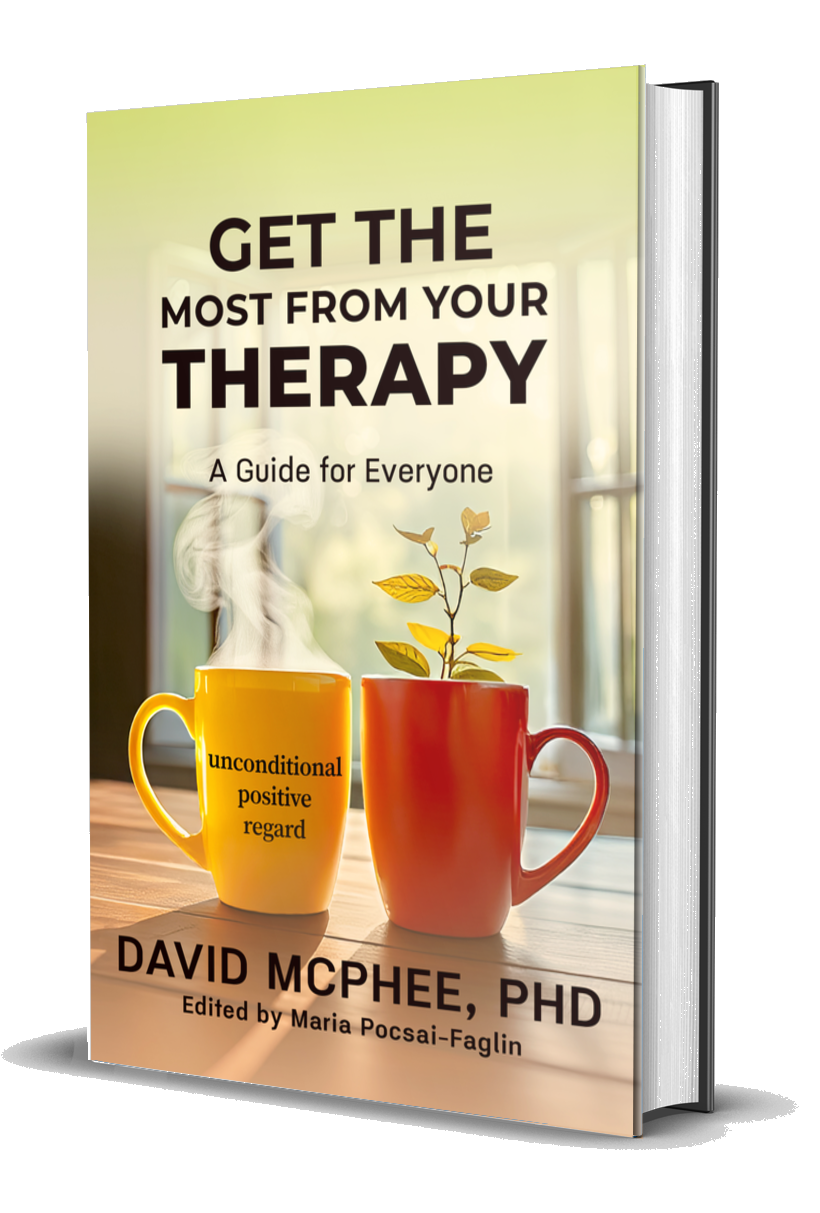
There are plenty more stories and insights on how therapy works in Get the Most From Your Therapy, a friendly, practical guide to the experience.