How do you cope with anxiety that turns into dissociation?
Well, the dissociative state is a way of coping, and may feel a lot better than the anxiety. Some people keep dissociating but learn to do it in a way that’s hardly noticeable. I remember a client from years ago, Rick, when I had less experience. I saw him look down and fairly still from time to time and concluded that Rick was a thoughtful person, pausing to process an idea or prepare a response.
Not so. Elvis had left the building, pretty much, for that extended moment—that’s how Rick explained it to me. I learned that Elvis tended to leave during discussions of Rick’s childhood, early years. He and I agreed that I didn’t need to do anything at all except wait.
I did wait and paid close attention to what seemed to trigger things. I didn’t change my approach or get super cautious about topics—with the dissociation available, my client was able to engage in therapy fully, just with pauses.
We spent months on the family stuff, and Rick continued to accompany Elvis on those departures as needed, but the pauses were shorter and shorter, more and more nothing more than a long nod. Then they disappeared entirely, no longer needed. Now I’m more likely to notice those healthy mini-moments.
So dissociation can be hard to manage, even temporarily disabling in a sense, depending on when and how they happen, but they can also be a very useful coping strategy.
David McPhee, PhD
4.7 ⭐ on Amazon
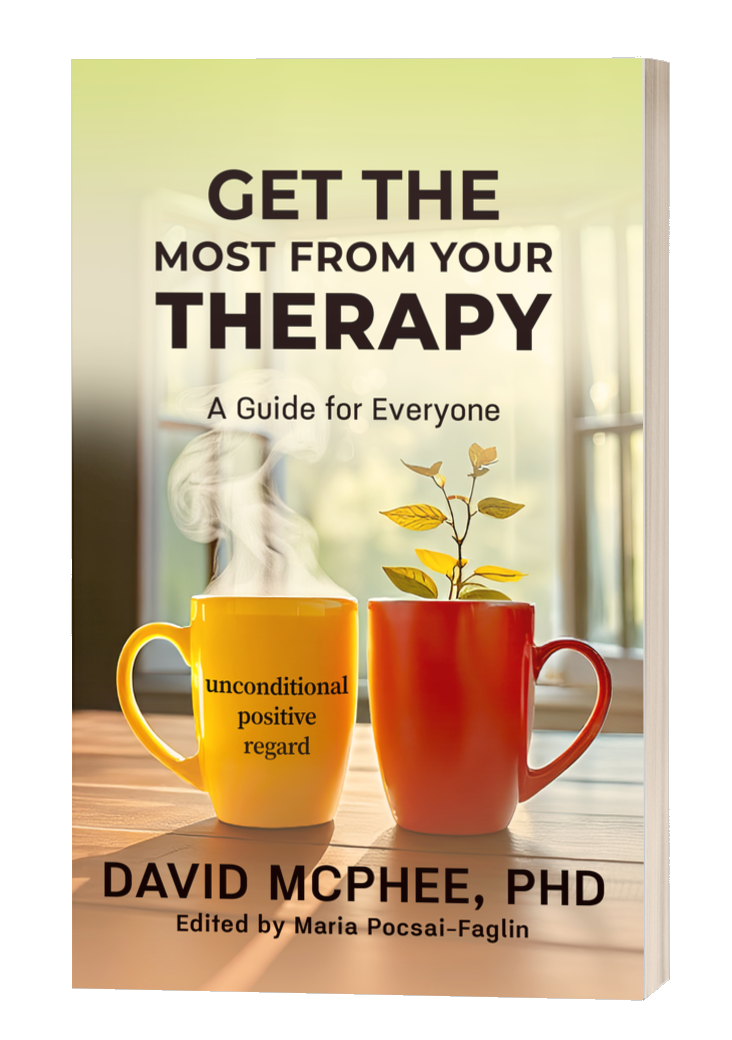
There are plenty more stories and insights on how therapy works in Get the Most From Your Therapy, a friendly, practical guide to the experience.