I never did CBT like a class, as if the client were a student, with the lessons and the worksheets, following a manual. That’s psychoeducation, possibly helpful and interesting, but absolutely not psychotherapy. Not remotely. It’s like reading about a love scene as opposed to being in one.
That doesn’t mean I rejected the idea that challenging our irrational beliefs could impact bad feelings. Of course it can, and learning and applying skills for having helpful conversations in our brains can be really useful.
If you’ve got a good working relationship with a client, based on trust and commitment, CBT-type interventions can be great.
CLIENT: Everything has gone to shit, she left me, I got fired, and I didn’t get into school.
THERAPIST: Feels like it’s the end of the world, and you see no point in going on. (Intentional overstatement challenges catastrophic thinking)
CLIENT: Well, maybe not that bad, but I do feel like crap and have no idea what to do next.
THERAPIST: So, everything you were planning on has changed, so now you just have endless possibilities. (A cognitive reframing of what the client said, but in neutral/positive terms, with the “endless” thrown in for dramatic effect).
CLIENT: What do you mean, possibilities?
THERAPIST: Just smiles and nods and leans in a little and waits.
Here’s where the therapeutic relationship, which is almost everything, can be supportive, empowering, and healing. You do not get that from challenges and reframings and worksheets. It’s the relationship that makes them work.
David McPhee, PhD
4.7 ⭐ on Amazon
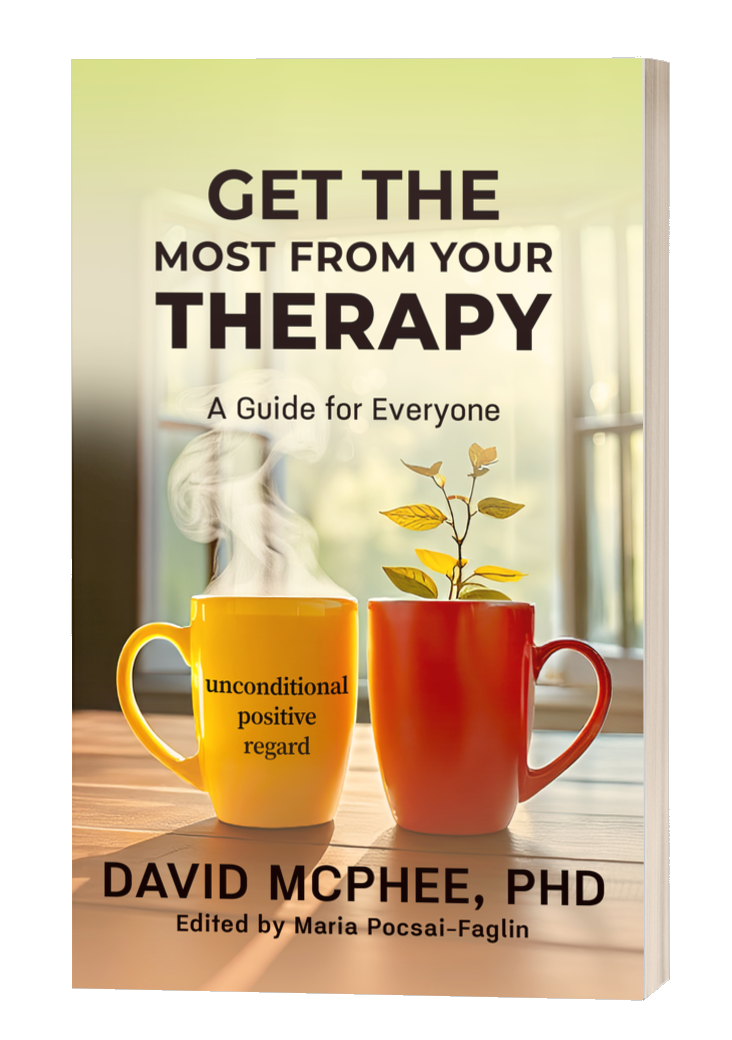
There are plenty more stories and insights on how therapy works in Get the Most From Your Therapy, a friendly, practical guide to the experience.